
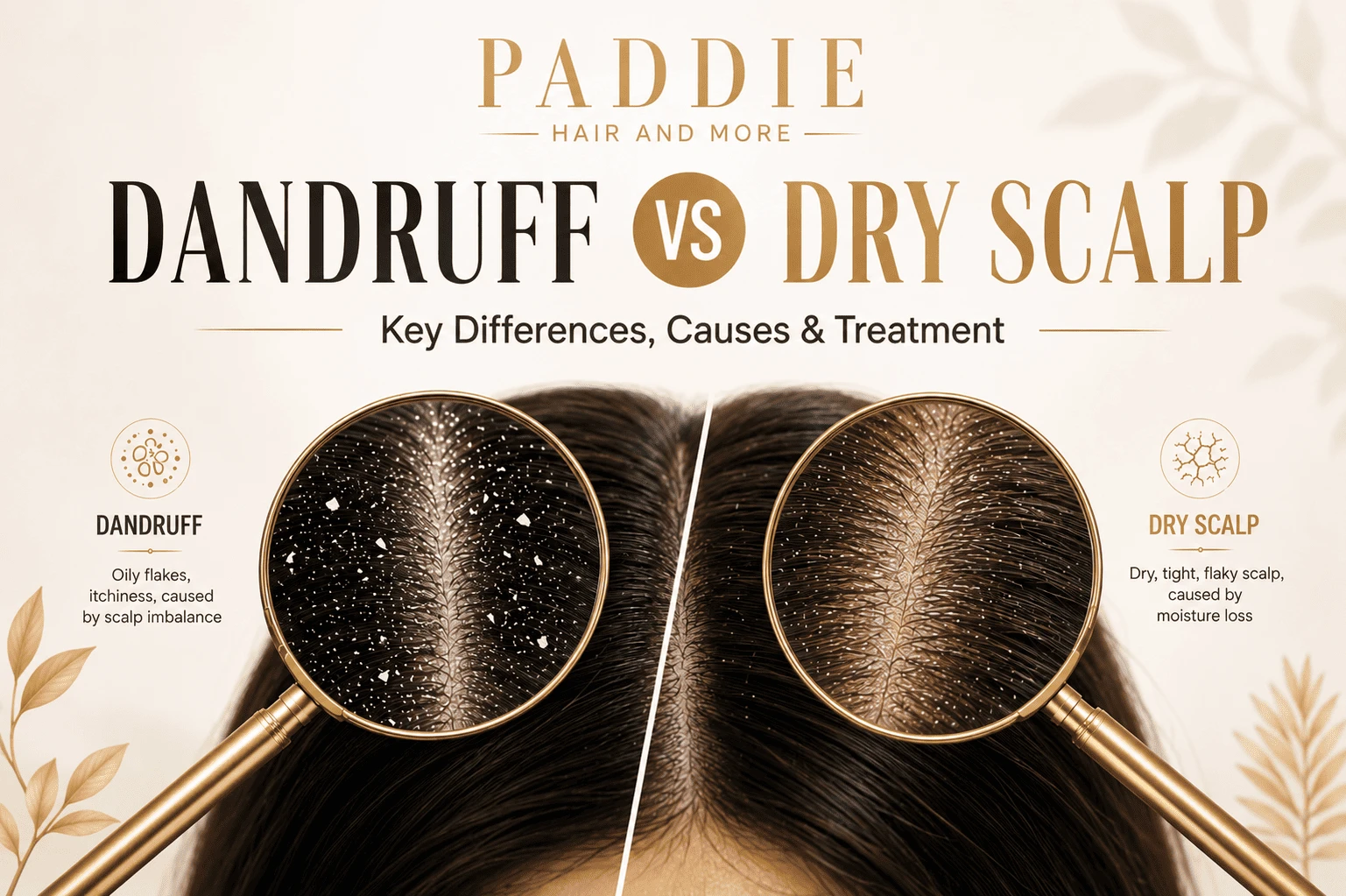
A flaky scalp can be frustrating, especially when white flakes appear on your clothes or your scalp starts feeling itchy. But not every flaky scalp has the same cause. Dandruff and dry scalp are two different concerns, and choosing the right treatment starts with knowing which one you have.
At Paddie Hair and More Salon, we believe that healthy-looking hair begins with a healthy scalp. Understanding the difference can help you avoid unsuitable treatments and choose the right professional care for your scalp and hair.
What Is Dry Scalp?
A dry scalp usually occurs when the scalp lacks sufficient moisture. It may feel tight, rough, or mildly itchy, and the flakes are generally small, fine, and white.
Dry scalp can be linked to factors such as:
- Cold or dry weather
- Frequent shampooing
- Hot showers
- Harsh hair products
- Excessive heat styling
- Lack of scalp moisture
If your scalp feels tight after washing and the flakes are small and powdery, dryness may be the main concern.
What Is Dandruff?
Dandruff is different from simple scalp dryness. It is commonly associated with excess oil and an imbalance involving a naturally occurring scalp yeast called Malassezia. Dandruff may cause noticeable flakes, itching, and sometimes scalp irritation.
Typical signs include:
- Larger or more noticeable flakes
- An oily or greasy scalp
- Persistent itching
- Flaking that continues despite regular washing
- Occasional scalp redness or irritation
Because dandruff and dry scalp have different underlying causes, the treatment approach should also be different.
Dandruff vs Dry Scalp: Spot the Difference
Dry Scalp | Dandruff |
Scalp often feels dry or tight | Scalp may feel oily or greasy |
Fine, small white flakes | Larger, more noticeable flakes |
Usually related to moisture loss | Often associated with excess oil and scalp yeast |
Gentle, moisturising care may help | Anti-dandruff scalp care may be required |
Scalp may feel rough or uncomfortable | Itching and irritation can be more persistent |
Knowing these differences can help you understand why one treatment may work well for someone else but not for you.
Treatment for Dry Scalp
Dry scalp generally benefits from gentle and hydrating care rather than aggressive cleansing. A professional salon consultation can help identify whether your scalp needs more moisture and whether your current shampoo or styling routine may be contributing to dryness.
A suitable salon approach may include:
Gentle scalp cleansing: A mild cleansing routine can help remove buildup without unnecessarily stripping natural oils.
Hydrating scalp treatment: Moisture-focused treatments can help improve scalp comfort and support softer-feeling hair.
Conditioning care: The lengths and ends may also require additional hydration, particularly if the hair is dry or chemically treated.
Lifestyle and routine advice: Reducing very hot water, excessive heat styling, and overly frequent washing may help maintain scalp moisture.
Treatment for Dandruff
Dandruff usually requires a different approach. Instead of simply adding moisture, the focus is often on scalp cleansing and dandruff management.
Depending on the scalp condition, professional care may include:
Scalp cleansing: A suitable cleansing treatment can help remove excess oil, flakes, and product buildup.
Anti-dandruff products: Ingredients such as ketoconazole, zinc pyrithione, selenium sulfide, or salicylic acid may be used in appropriate products. The right choice depends on the individual’s scalp and should be used according to product directions or professional advice.
Scalp-focused salon treatment: A salon professional can assess the scalp and recommend care that complements your home routine.
Regular maintenance: Dandruff can return, so maintaining an appropriate scalp-care routine is often more important than relying on a single treatment.
If the scalp is severely inflamed, painful, develops sores, or does not improve with appropriate care, it is better to consult a dermatologist rather than relying only on salon treatments.
Why You Shouldn’t Choose a Treatment Based Only on Flakes
Seeing flakes does not automatically mean you have dandruff. Using a strong anti-dandruff treatment on an already dry scalp may not address the real issue, while treating persistent dandruff as simple dryness may not provide the results you want.
This is why a scalp assessment before treatment can be valuable. At Paddie Hair and More Salon, the focus should be on understanding your scalp condition and then selecting a treatment that suits your specific needs.
How a Salon Can Help
A professional salon consultation can look at several factors, including your scalp’s oiliness, visible flakes, dryness, hair texture, product buildup, and current hair-care routine.
Whether you are searching for the best salon in Mumbai for personalised hair and scalp care or simply want guidance on choosing the right treatment, professional advice can make your routine more targeted.
Paddie Hair and More Salon can help you understand whether your scalp needs hydration, cleansing, dandruff-focused care, or a combination of suitable treatments.
Simple Scalp-Care Tips at Home
Regardless of the cause of your flakes, a few basic habits can support better scalp care:
- Choose hair products according to your scalp type.
- Avoid scratching the scalp aggressively.
- Rinse shampoo thoroughly.
- Avoid excessively hot water.
- Cleanse the scalp regularly without over-washing.
- Avoid applying heavy oils or styling products if they worsen scalp buildup.
- Keep brushes, combs, and other hair tools clean.
- Follow a consistent hair-care routine rather than changing products frequently.
When Should You Seek Professional or Medical Advice?
Occasional mild flaking may improve with an appropriate hair-care routine. However, persistent dandruff, intense itching, redness, swelling, painful areas, or unusual scalp changes deserve professional attention.
A salon can help with cosmetic scalp and hair care, but a dermatologist is the right professional for diagnosing or treating scalp conditions that may require medical attention.
Choose the Right Treatment for Your Scalp
The key difference is simple: dry scalp is primarily about a lack of moisture, while dandruff is generally linked to scalp oiliness and an imbalance involving naturally occurring yeast. Their symptoms can overlap, which is why identifying the cause before choosing a treatment matters.
If you’re looking for Best salons in Mumbai for hair and scalp care, Paddie Hair and More Salon can be a place to begin with a personalized consultation. As a Unisex Salon in Mumbai, the salon can provide tailored hair-care guidance for different hair types, styles, and scalp needs.
Healthy hair starts at the scalp. Before choosing a treatment, understand what your scalp is actually asking for.
Frequently Asked Questions
1. How can I tell if I have dandruff or a dry scalp?
A dry scalp usually produces small, fine white flakes and may feel tight or uncomfortable. Dandruff often causes larger flakes along with itching and can occur with an oily or greasy scalp. If you’re unsure, a professional scalp assessment can help identify the right concern.
2. Can a dry scalp turn into dandruff?
Dry scalp and dandruff are different conditions, so one does not necessarily turn into the other. However, using unsuitable products or over-cleansing the scalp can make flaking and irritation more noticeable.
3. What is the best treatment for dandruff?
Treatment depends on the severity and cause. Anti-dandruff shampoos containing ingredients such as ketoconazole, zinc pyrithione, selenium sulfide, or salicylic acid may help. A salon professional can also recommend an appropriate scalp-care routine, while persistent or severe symptoms should be evaluated by a dermatologist.
4. Is scalp treatment at a salon suitable for dry scalp?
Yes. A professional scalp treatment can focus on gentle cleansing and hydration when dryness is the concern. At Paddie Hair and More Salon, treatment can be selected according to your scalp condition rather than using the same approach for everyone.
5. How often should I get a dandruff or scalp treatment?
There is no single schedule that works for everyone. It depends on your scalp condition, hair type, product usage, and home-care routine. A consultation can help determine how frequently professional care may be appropriate.
6. When should I see a dermatologist instead of getting a salon treatment?
If flaking is persistent or accompanied by severe itching, redness, swelling, sores, pain, hair loss, or other unusual changes, consult a dermatologist. Salon treatments are useful for cosmetic scalp care but should not replace medical diagnosis or treatment when a scalp condition is suspected.